

Performance Standards
Introduction
Section titled “Introduction”The Performance Standards page displays the status of all performance standards configured for your installation, allowing users to assess the health of the barrier model from a standards compliance perspective rather than by area or by hazard.
Because each BSP deployment is configured to the needs of the facility, the performance standards present on this page, and the names used for them, will vary between installations. However, the underlying categories and the concepts they represent are consistent across all deployments. If the category names in your deployment differ from those described below, the descriptions will still help you understand what each category is concerned with.
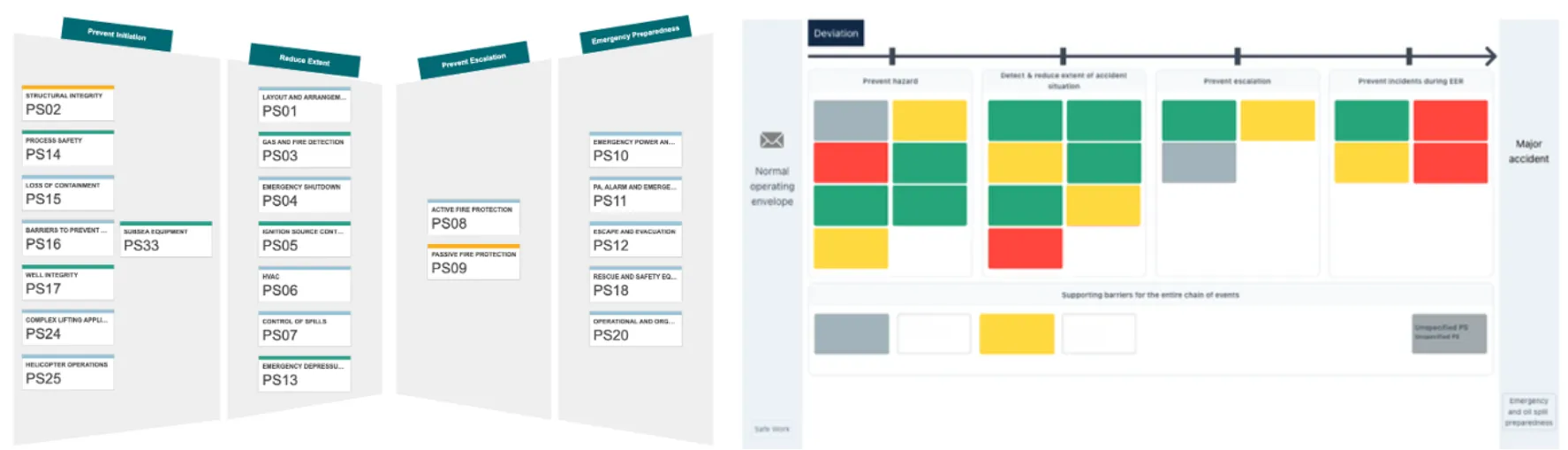
Categories
Section titled “Categories”Performance standards are grouped into categories that broadly correspond to the stages of the journey from normal operations to major accident described in Concepts. Each category groups together the standards relevant to a particular stage of that journey.
Prevent initiation
Section titled “Prevent initiation”Standards in this category relate to controls that keep the facility within its normal safe operating envelope and prevent a deviation from developing. These are the first line of defence, the barriers that stop a hazardous situation from arising in the first place. Examples include well integrity and process safety.
Reduce extent
Section titled “Reduce extent”Standards in this category relate to controls that limit how far a developing deviation progresses. Where prevent initiation has not been fully effective and a deviation is underway, these standards ensure that barriers are in place to contain the situation before it becomes a hazardous event. Examples include Fire and gas detection and emergency shutdown.
Prevent escalation
Section titled “Prevent escalation”Standards in this category relate to controls that stop a hazardous event from developing into a major accident. Where a hazardous condition already exists, these standards ensure that barriers are in place to prevent it from worsening. Examples include active fire protection and passive fire protection
Emergency preparedness
Section titled “Emergency preparedness”Standards in this category relate to controls that ensure an effective response if a major accident occurs. These are the last line of defense, the barriers that protect personnel and manage the consequences of a major event. Examples include evacuation systems and emergency response procedures.
Navigating the Performance Standard display
Section titled “Navigating the Performance Standard display”Each performance standard displayed on the page shows:
- Its current status, colour-coded in line with the standard scoring scale. See scoring section.
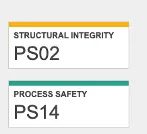
- The category it belongs to.

- Click for common menu.
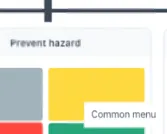
- The input signals contributing to its current status – this can be accessed by clicking.